|
MLB's Ten Worst Contracts Ranking the most preposterous contracts in baseball by Keith Glab, BaseballEvolution.com November 23, 2010 With free agency season upon us, some players are going to get awarded long-term contracts that look really bad in a couple of years. Or in the case of Derek Jeter and the Yankees, a long-term contract that looks really bad right now. Fortunately, the Yankees already have a couple of terrible contracts in the books to deflect attention from what is awarded to Jeter. Here are the ten worst contracts in baseball. This only analyzes what is left on players' contracts; no attempt is made to reconcile how over- or underpaid a player was in previous years of a current deal. If you were to start a small-to-mid market franchise today, these are the salaries you would least want to have on your books. Age listed as of April, 2011. Salary listed per year courtesy of Cot's Baseball Contracts. 10t. Kyle Lohse Age 32 10t. Aaron Rowand Age 33 I awarded a tie due to the similarities here in age, contract, and lack of production. Aaron Rowand is a fifth outfielder who hits like a fifth infielder. Kyle Lohse is a fifth starter who pitches like a Triple-A starter. Only 71 pitchers since World War II have pitched at least 90 innings in a season and had a higher ERA than Lohse's 6.55 and only 14 have had an ERA+ worse than his mark of 60. Rowand still plays good defense, but his .281 OBP last year was made even worse by the fact that most of his at-bats came as a leadoff hitter. That partly explains why he only had 42 runs scored and 34 RBI in 105 games. Lohse was worse than Rowand in 2010, but he was better in 2008 and 2009. Bottom line, I'm not sure you'd want either of these guys on your team at any price, yet they rank among the highest-paid players on their respective teams. 9. Travis Hafner Age 33 It may surprise you to learn that Hafner's .374 OBP would have ranked 11th among AL hitters last season had he enough plate appearances to qualify. But therein lies the problem - Hafner has averaged just 90 games per season over the past three years. As a DH, that is pretty bad. The ship has sailed on Hafner ever returning to his 2004-2006 form, when he was one of the best hitters in all of baseball. At this point, the Indians would take a replica of his 2007 season, when he was a solid hitter who played the whole year. If he could do that, he'd only be overpaid. As it stands now, Hafner's contract is an embarrassment. 8. Michael Young Age 34 The Rangers shifted Michael Young from shortstop to third base in the hopes of rejuvenating his bat and softening the detriment of his defense. The bat rejuvenation lasted one season and the defense never improved. Now Texas has a decent-hitter in his mid-thirties at a position where even elite hitters decline sharply in their mid-thirties. And did I mention his abhorrent defense? Young has been a good clutch performer for most of his career, but that wasn't the case in 2010. Maybe the career-high he set in strikeouts had something to do with that. At any rate, Young isn't bringing much to the table anymore, and he figures to bring less and less over the next few years. 7. A.J. Burnett Age 34 For years, A.J. Burnett was considered a good pitcher poised to break out and become one of the best in the game. His fastball/curveball combo was unparalleled, and with consistent health and improved command, nothing would stand between him and perennial Cy Young contention. Unfortunately, the command never came, the fastball lost velocity, and the curve lost movement. The result in 2010 was the highest ERA ever for a Yankee who made over 25 starts and a 10-15 record on a 95-win team. It's difficult to imagine Burnett repeating his disastrous 2010 season, but it's even harder to imagine him making his contract look like something other than a huge burden. Burnett hasn't managed an ERA under 4.00 since 2007 and hasn't done that in more than 25 starts since 2005. 6. Barry Zito Age 32 Zito is actually a more useful player than Rowand, his partner in crime. But a longer, more expensive contract makes Zito's total package less desirable. And hey, at least the Giants let Rowand play in the postseason. Zito's 2010 season appears consistent with his other three underwhelming years in San Francisco. One important difference is that while Zito usually pitches better in the second half, in 2010 he slumped to 2-10 with a 4.70 ERA. Zito turns 33 in May, but he has logged a lot of innings for a pitcher his age and throws with the velocity of a 43-year old. Zito could regress from serviceable innings-eater to Kyle Lohse any day now. Perhaps he already has. 5. Alfonso Soriano Age 35
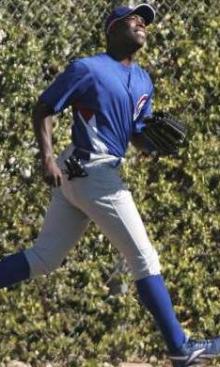
Soriano is often considered the poster child for bad contracts. While certainly lackluster, Soriano's deal isn't the worst around. After an injury-plagued 2009 season, Soriano posted an .818 OPS last year, which is just points off his career mark of .834. No, that's not terrific, but it would have been silly to expect much more from him in his mid-30s. While most Cubs fans underreacted when Soriano's signing was first announced, most Cubs fans overreact to his contract status now. In terms of speed and defense, however, the Cubs and their fans can justifiably feel cheated. In 2006, Sori stole 41 bases and was the best left fielder in all of Major League Baseball defensively. He stole 19 bases in both 2007 and 2008, and was still among the most valuable defensive left fielders due to his underrated arm. The past two seasons, however, he has combined for just 14 steals and -8 runs saved. A defensive replacement was used for him in a whopping 40 of his 134 starts last season. Trading Soriano to an AL club might be an attractive option if not for a pesky no-trade clause blocking the way. As it is, he is a one-tool player making a lot of money. 4. Vernon Wells Age 32 Wells probably hoped to avoid lists such as this with his resurgent 2010 season, but it's easy to see past his facade. Wells was one of many Blue Jays who benefited from Rogers Centre suddenly playing like a slugger's paradise in 2010, increasing home run output by a whopping 35%. As for Wells, he went .321/.363/.628 at home and .221/.301/.407 in the USA. I don't know what changed at RC last year, but Wells had better hope it stays changed. Other than Wells' age, road woes, and offensive inconsistency, he hurts his team because he continues to play centerfield. He has cost the Jays 33 runs playing there over the past three years. While only four of those negative runs came last season, it's hard to imagine Wells not becoming a complete embarrassment in center by the end of his contract. If they weren't willing to move him to a corner when they had Alex Rios (who only avoids this list due to his defense) on the roster, it's hard to figure what might prompt Toronto to pry him out of there. 3. Mark Teixeira Age 31 And here come the angry emails from Yankee fans. Oh well. I realize the man has won two straight Gold Gloves, but he is no better than average at his position these days. Happily, first base is one position in which you wouldn't expect defense to deteriorate rapidly with age. I'm sure most Yankee fans would like to write off Teixeira's 2010 offensive numbers as a down year, but there is a clear trend; his OPS+ the past four seasons have been 161, 152, 141, and 125. Does he have a couple more productive seasons in him? Sure. But those seasons will look more productive than they actually are because of Yankee Stadium and towards the end of his contract, even that won't be able to mask his failings. Tell you what, only send angry emails if you promise not to boo Teixeira in 2015, when the Yankees will be wishing they were paying a 40-year old Alfonso Soriano $18 million rather than giving $22.5 mil to Teix. It's ironic that Orioles fans boo Mark Teixeira at Camden Yards, seeing as how Teixeira's contract would have set back Baltimore's rebuilding process back another decade. The native Marylander's decision to eschew his hometown team in favor of the Evil Empire was the best thing to happen to the Orioles since Earl Weaver. 2. Ryan Howard Age 31
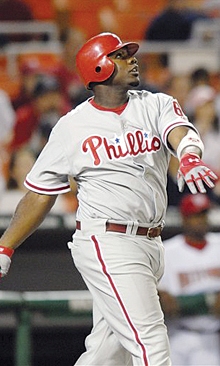
Howard's contract only differs from Teixeira's in the details. As a player, however, Teix is superior. While Teixeira is average defensively, Howard somehow cost the Phillies 14 runs with the glove in 2010. Whereas Teixeira's offense is declining, Howard has been playing at a fairly low level for three years now (.269/.350/.541). I don't have much more than intuition to back this up, but I think a 6-foot-4, 260-pound player is going to decline more precipitously than a 6-foot-3, 220-pound player will. I suppose I'll be getting angry Philly emails as well. I will say this for the first basemen - they have both been clutch hitters over the course of their careers. That won't justify their contracts, but it does soften the pain. 1. Carlos Lee Age 34 Even though the Astros are only on the hook for two more years of Lee, the former RBI horse may well have been the worst regular player in baseball last year. He cost the Astros 15 runs in left field despite only playing 133 games there. His .291 OBP was second-worst among NL regulars to shortstop Alicides Escobar and worst among all MLB outfield regulars, while his .708 OPS was 10th worst among MLB outfielders. There is talk of moving Lee to first base where he can be less detrimental with the glove, but only one regular MLB first baseman managed an OPS worse than .708 last year (Jorge Cantu). Lee was actually a good hitter in 2008 and a decent hitter in 2009, but his age and weight are increasing to the point that it's hard to believe he'll ever sniff an .800 OPS again. Lee's no-trade clause expired this year, but that doesn't really matter when no team would pay more than the league minimum for him at this point. He has the worst contract in baseball. Disagree with something? Got something to add? Wanna bring up something totally new? Keith resides in Chicago, Illinois and can be reached at keith@baseballevolution.com. |